In 1495, a prosperous wool merchant named Thomas Burton died and left money in his will for priests to pray for his soul. Those priests went on to found a school that has educated boys in Loughborough for more than 530 years.
The Merchant of Calais
Thomas Burton was a wealthy wool merchant who worked for the Company of the Staple at Calais, the prestigious medieval trading organisation that controlled England's wool exports. This was a position of considerable standing; the Staple was the backbone of England's medieval economy, and membership signified both wealth and influence.
When Burton died in 1495, or possibly 1496 according to some records, he left legacies not only for the school but also for the upkeep of road bridges in the area. This dual charitable bequest reveals a man concerned with both spiritual welfare and practical public infrastructure.
From Chantry to Classroom
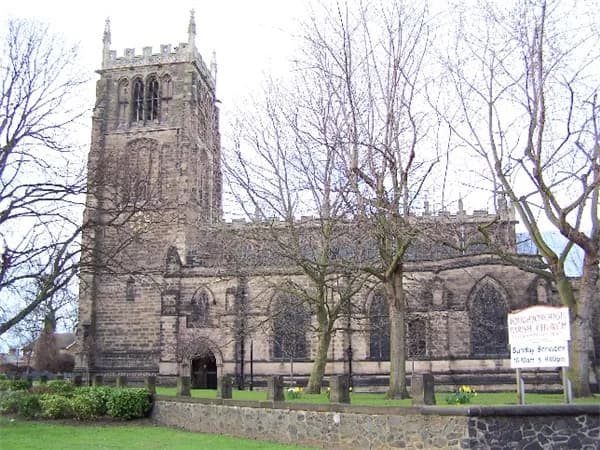
The school began humbly within Loughborough Parish Church, now known as All Saints Church. Burton's will provided funds for priests to say prayers for his soul, a common medieval practice. These chantry priests became the first teachers, and the school was born from this ecclesiastical foundation.
The original 1495 foundation has survived the Dissolution of the Monasteries, the English Civil War, and two world wars. By 1818, the foundation encompassed three separate schools: a Grammar School for twenty boys, a Reading School for 120 boys, and a Writing School for eighty boys.
Burton Walks and a Queen's Visit
In 1852, the school moved to its present location on Burton Walks, a street named in honour of its founder. The entrance features a Grade II listed lodge and gate screen built that same year, which bears a carved quatrefoil panel framing the initials "TB" for Thomas Burton. It remains a tangible link to the medieval merchant visible to passers-by today.
The school's connection to the Burton legacy continues in the Burton Chapel at All Saints Church, where the school still holds services. In 1996, the school celebrated its quincentenary with a visit from Queen Elizabeth II, who opened the new English block, now known as the Queen's Building.
Loughborough Grammar School Today
Loughborough Grammar School is now part of the Loughborough Schools Foundation and remains one of England's oldest surviving schools. It educates 789 boys aged ten to eighteen as a private day and boarding school, with a 110-acre campus that includes a 70-acre sports ground in nearby Quorn.
The school motto, Vires Acquirit Eundo ("We Gather Strength As We Go"), speaks to its enduring evolution. In 2021, the Independent Schools Inspectorate rated it "excellent" in all categories. The school lost 58 former pupils in the First World War and 61 in the Second World War, their sacrifice recorded on memorials that stand as testament to the school's deep roots in the community.
A Legacy in Stone and Education
From a medieval wool merchant's pious bequest to a modern independent school with nearly 800 pupils, Thomas Burton's legacy is woven into the fabric of Loughborough. The carved initials on the lodge at Burton Walks, the chapel that bears his name, and the thousands of boys educated over five centuries all trace their origin to one man's will, written as the Wars of the Roses drew to a close.